Choosing a Translation
As an Amazon Associate, we earn from qualifying purchases.
English translations of Sappho differ in three ways: the form they give the poems, the number of fragments they include, and the date at which their text was fixed. Sappho’s poems survive as quotations in later writers and as damaged ancient copies, and each new papyrus find has altered what a translator can include.
Public-domain translations
Several older translations are in the public domain and free to read online on Project Gutenberg: John Myers O’Hara, The Poems of Sappho (1910); H. De Vere Stacpoole, Sappho: A New Rendering (1920); and Bliss Carman, Sappho: One Hundred Lyrics (1904).
The O’Hara and Stacpoole books are verse renderings. Stacpoole’s contains the Hymn to Aphrodite, the Ode to Anactoria, fifty further fragments, and Ovid’s Heroides 15, “Sappho to Phaon.” In the introduction to Carman’s book, C. G. D. Roberts describes Carman’s undertaking as not one of translation or paraphrase but of “imaginative and, at the same time, interpretive construction”. The 1925 edition of The Poems of Sappho with a foreword signed E. M. G. prints the Greek text, a literal prose translation, a metrical version and notes.
Why editions differ
Selections leave poems out, as Barnard’s and Barnstone’s volumes do. Even books aiming at completeness stop at the date of their writing, so an older edition prints shorter versions of poems later completed by new finds. Numbering also differs: H. T. Wharton’s edition follows Bergk’s numbers, J. M. Edmonds’s Loeb volume has its own, and modern books commonly follow Voigt’s.
The Translations
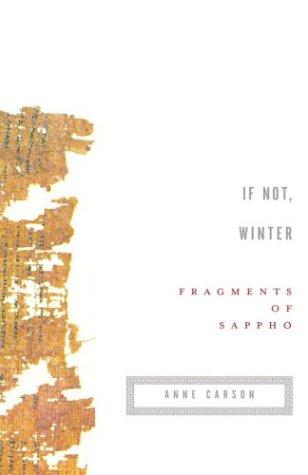
If Not, Winter: Fragments of Sappho — trans. Anne Carson (2002)
- Recommended
- Form: Verse translation with Greek on facing pages
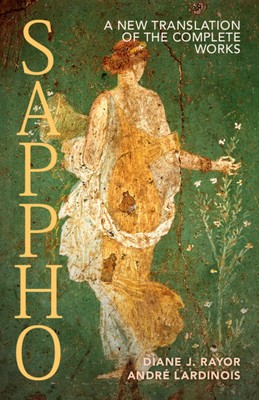
Sappho: A New Translation of the Complete Works — trans. Diane Rayor and André Lardinois (2014)
- Most complete
- Form: Complete verse translation with introduction and commentary notes
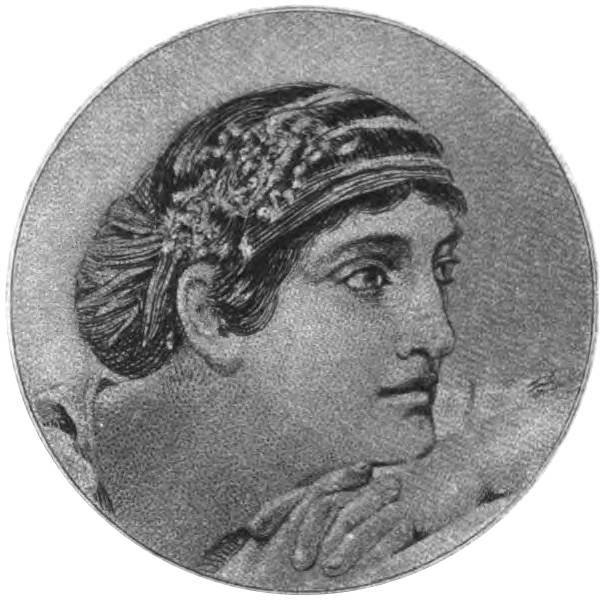
Sappho: Memoir, Text, Selected Renderings and a Literal Translation — trans. Henry Thornton Wharton (1885)
- Form: Literal prose translation, with Wharton’s notes, the verse renderings he collected, and the Greek
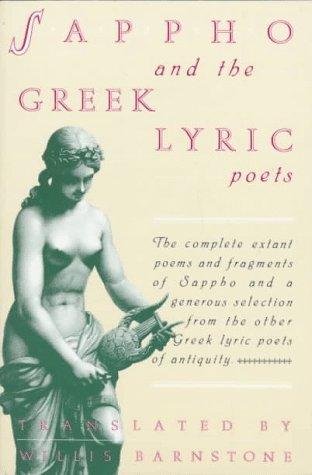
Sappho and the Greek Lyric Poets — trans. Willis Barnstone (1988)
- Form: Verse translation in an anthology of Greek lyric poets
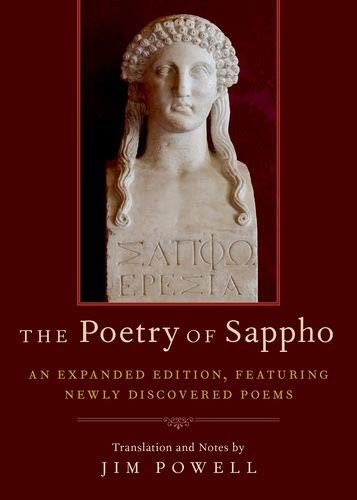
The Poetry of Sappho — trans. Jim Powell (2007)
- Form: Verse translation of the poems and fragments
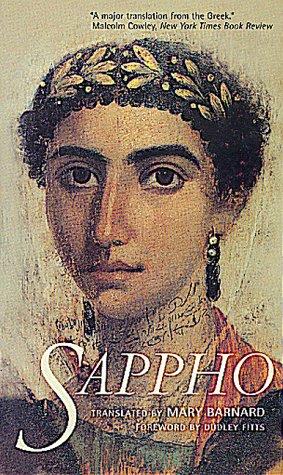
Sappho: A New Translation — trans. Mary Barnard (1958)
- Form: Selected verse translation